

A brighter, white smile is one of the most popular cosmetic goals patients share with us. With so many whitening options available today – from drugstore strips to professional treatments – it can be difficult to know which route is best.
Here’s a closer look at professional teeth whitening compared to DIY at-home options, including how they work and what to expect.
What Is Professional Teeth Whitening?
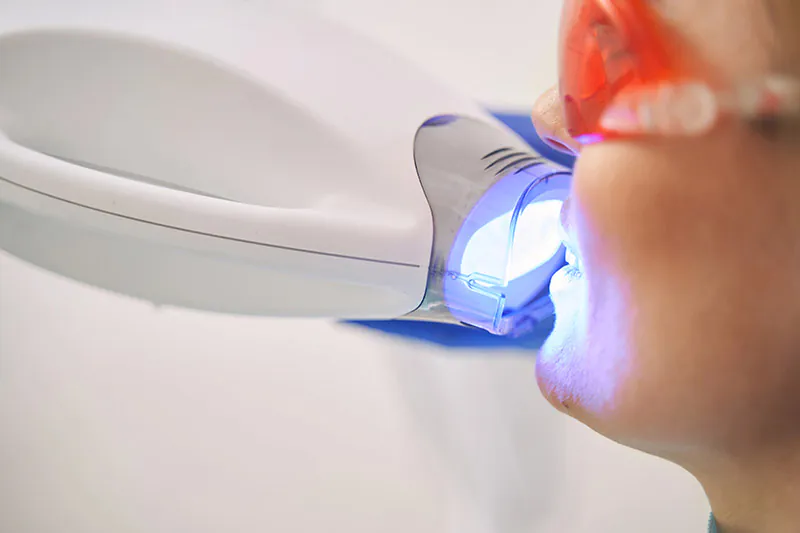 Professional whitening is provided or supervised by a dental professional. It typically uses higher-concentration whitening agents than over-the-counter products and is customized to your smile.
There are generally two types of professional teeth whitening treatments:
- In-office whitening treatments performed at your dental appointment
- Custom take-home trays created specifically for your teeth
These treatments are designed to brighten teeth safely while minimizing sensitivity and protecting your gums.
How Professional Teeth Whitening Treatment Works
Professional whitening products contain peroxide-based bleaching agents that break down stains on the enamel. Because the formula is stronger and carefully applied, results are often noticeable more quickly than store-bought options.
Many patients see a significant improvement in brightness, sometimes in just one visit for in-office treatment. Results vary depending on the type of staining and individual factors, but professional whitening is typically more predictable and longer-lasting.
What Is DIY At-Home Whitening?
DIY whitening refers to over-the-counter products you can purchase without a dental visit. These may include:
- Whitening strips
- Whitening toothpaste
- Whitening pens
- Generic tray systems
These products also use peroxide-based ingredients, but at lower concentrations.
How Take-Home Teeth Whitening Works
Like professional treatments, these products aim to lift surface stains from the enamel. However, because they are not customized to your teeth, the whitening agent may not distribute as evenly.
Some patients notice mild improvement with consistent use of take-home teeth whitening treatments. However, results are often more gradual and may not address deeper stains. Improper use can also increase tooth sensitivity or cause gum irritation.
Key Differences to Consider
When deciding between professional and DIY teeth whitening, here are a few important factors:
Strength and Speed
Professional treatments typically provide faster and more dramatic results due to higher-strength whitening agents.
Customization
Dentist-supervised whitening treatment is always tailored to your smile and provided for optimal comfort and effectiveness.
Treatment Safety
A dental exam before whitening helps ensure there are no underlying issues — such as cavities or gum health concerns — that should be treated first.
Types of Stains
Not all discoloration responds the same way to teeth whitening treatments. Yellow-toned stains often respond better than gray or internal discoloration. A dentist can help determine what to expect.
When to Talk to Your Dentist
Before beginning any whitening treatment, it’s a good idea to consult your dentist. Certain restorations, like dental crowns or fillings, do not respond to whitening, and sensitivity concerns may need to be addressed first.
At Conyers Family Dentist, we’re happy to evaluate your smile, discuss your goals, and recommend an approach that fits your needs. Whether you’re preparing for a special event or simply want a confidence boost, we can help you choose a safe and effective whitening option.
If you’re considering teeth whitening, contact our office to schedule a consultation and learn more about your options.
